
The Brain's Shortcut to Mastering New Skills
Recent research shows how the brain rewires itself for multitasking.
For decades, cognitive neuroscience has offered a consistent account of skill acquisition. When a person first encounters a complex task, the prefrontal cortex, the brain's decision-making control center, must work rigorously to interpret incoming information and guide choices. This reliance on the prefrontal cortex produces what researchers term as a "frontal bottleneck," a processing constraint that explains why novices find it difficult to perform a new task while attending to anything else.
What has remained far less understood is what happens to the brain after this initial struggle, once a skill has been practiced not for hours, but for months. A recent study by researchers at Lehigh University and Georgetown University addresses this gap directly, and in doing so, challenges a foundational assumption in learning science. They found that after extensive practice of a visual task, the visual areas in the back of the brain can execute the task automatically without the need for the prefrontal cortex.
Can Practice Really Rewire the Brain?
Published in the June issue of the Journal of Cognitive Neuroscience, the team investigated long-term skill development by constructing an unusually demanding experimental protocol. They developed a custom mobile application, and participants were asked to sort morphed images of cars into two arbitrary, meaningless categories, deliberately stripped of any real-world semantic association.
What distinguishes this study from typical learning research is its sheer scale. Rather than the few hours of training common to most experiments, participants completed upward of 30,000 trials across five to 10 weeks of sustained practice.
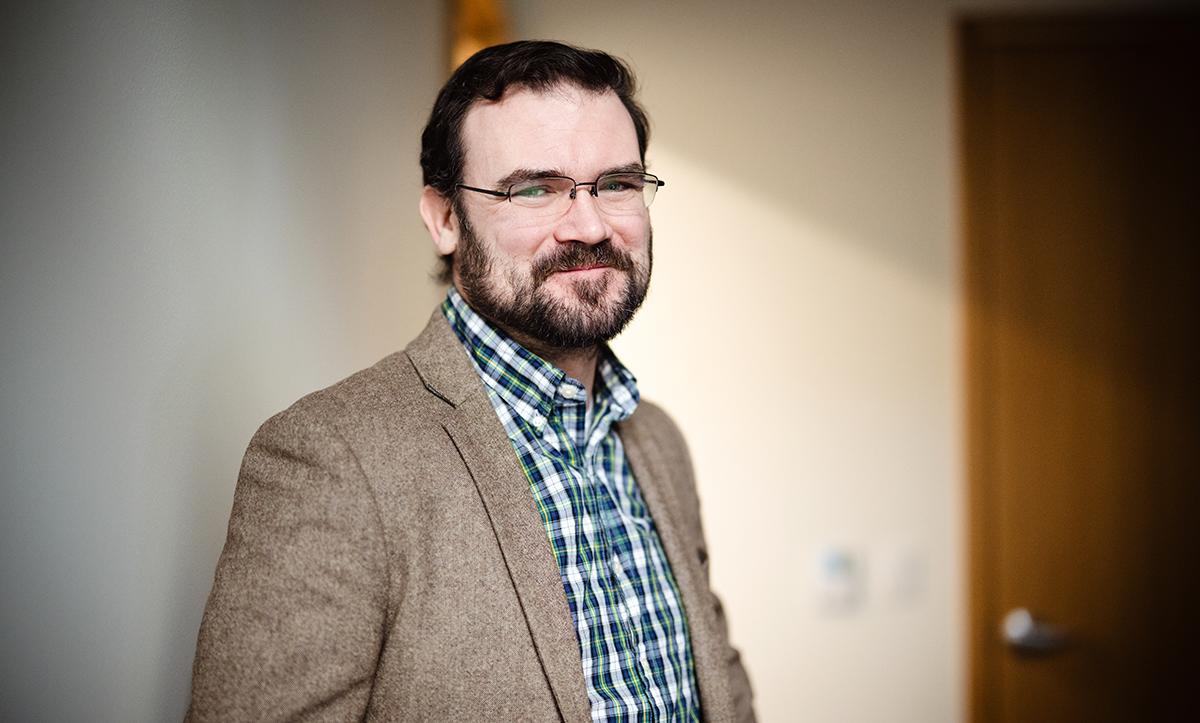
“Being able to get people to do this much training makes this a really unique study,” says Patrick Cox, assistant professor of psychology. “Unlike lab studies like this where people are present, we created an app that people could use on their phones or on their computers and laptops. A lot of people ended up just doing it on their laptops. So, they were able to train from home.”
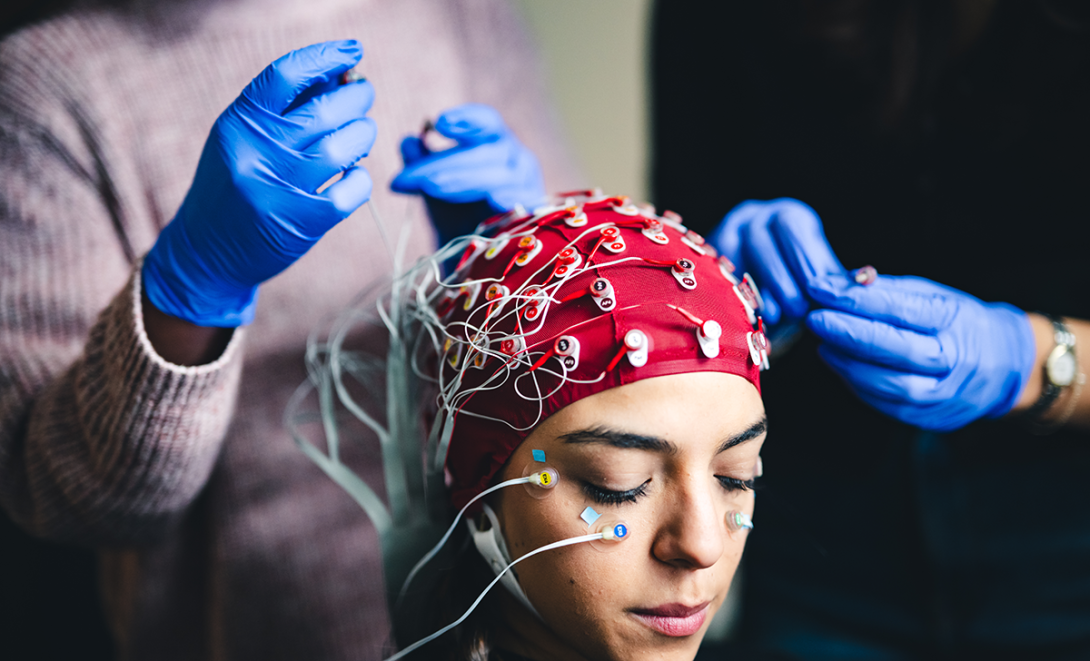
Brain activity was tracked throughout using MRI and EEG to identify not only where in the brain processing occurred, but when, down to the millisecond. Data was collected in the lab of Maximilian Riesenhuber, professor of neuroscience at Georgetown University School of Medicine and co-director of the Center for Neuroengineering. The team collected the neural data at two key intervals, following initial learning (roughly four hours, or 6,000 trials, of practice) and following extensive experience (more than 30,000 trials). To assess cognitive load directly, participants were also given a task to categorize vehicles while simultaneously monitoring colored disk stimuli in the periphery of the screen.
The Brain Finds a Better Way
The results point to a genuine reorganization of how the brain processes a well-practiced task, rather than a simple gain in speed or efficiency within existing circuits.
They found that after people had initially learned to sort the images, the task activated their prefrontal cortex—he brain can typically only handle one task at a time.
However, when researchers scanned the brains of participants who had been practicing the sorting task for weeks, they found that the categorization was now happening in the temporal cortex, a part of the brain involved in encoding memory and recognizing complex objects. Category information from the car-selective area in the temporal cortex bypassed the prefrontal cortex and connected directly to output parts of the brain.
Researchers found that during early training, this visual area in temporal cortex functioned largely as a relay. It registered the visual input and forwarded it to the prefrontal cortex, which performed the comparatively effortful work of analysis and categorization. After extensive practice, however, the visual cortex itself appeared to take on this categorization function directly. EEG recordings showed category-related neural activity emerging in under 200 milliseconds, a timescale suggesting that posterior visual regions were resolving the decision before frontal regions had meaningfully engaged with the stimulus.
As the visual cortex assumed a greater role in categorization, its functional connectivity with the prefrontal cortex declined markedly. In its place, researchers observed a strengthened, more direct pathway linking visual processing regions to motor output areas—the circuits responsible for translating a decision into a physical response. This more direct route effectively allowed the brain to bypass the prefrontal cortex during task execution.
This reorganization has clear behavioral consequences. With the prefrontal cortex no longer required for the categorization task itself, participants demonstrated significantly improved performance by sorting vehicles accurately while simultaneously tracking peripheral visual targets. The researchers identified a relationship between the degree of disconnection between visual and frontal regions and the magnitude of improvement in multitasking ability. This suggests that neural reorganization itself, rather than practice alone, underlies the capacity for effortless dual-task performance.
These findings carry a significant methodological implication: the neural patterns captured in short-duration learning studies—the dominant paradigm in the field—may not generalize to the brain states associated with genuine, long-term mastery. As the researchers note, the circuitry engaged during the earliest stages of learning does not reflect how the brain operates after sustained practice extending across months or years.
What This Means for Everyday Life
This research offers a compelling account of what happens beneath the surface when practice gives way to mastery. The transition is not merely behavioral but anatomical and functional, involving a measurable redistribution of labor across neural systems. As the visual cortex assumes greater responsibility for routine decision-making and forges more direct connections to motor output, the prefrontal cortex is liberated to attend to novel or competing demands. The implications extend beyond the specific task studied here, suggesting that the long-term neural signature of expertise.
"In something like a TSA officer screening bags or a radiology setting, speed matters,” says Cox. “A radiologist has a large caseload to get through each day, a TSA officer has a long line of people waiting to catch their planes. Our research shows that once a skill becomes automatic, it's not only faster but also more resilient to interference from other tasks and outside pressures. That's what makes automaticity so valuable in these applied settings."
"If a task still required a lot of conscious deliberation, other things competing for your attention could throw it off. But once it becomes automatic, it's no longer as dependent on conscious attention — so it's less vulnerable to interference from other tasks. That's a real advantage in these applied settings."
What's Still Left to Learn
Next, researchers want to study the mechanisms or signals involved in moving learning from one part of the brain to another and to figure out what the limits of multitasking are.
"Another interesting question is what kinds of tasks can be learned well enough to do in parallel," Cox says. "We can walk and chew gum at the same time, but texting while driving will never be safe, because it takes our eyes off the road. It comes down to whether you can train fully separate neural circuits for two tasks to become compatible."
Taken together, the findings reframe expertise not as a faster version of early learning, but as a different brain state altogether, one in which perception and action are wired directly together, leaving the prefrontal cortex free to take on whatever comes next. For fields where split-second accuracy under distraction is routine, that shift from effortful thought to practiced instinct may be the clearest sign that true mastery has taken hold.